A coffee maker is an indispensable tool to create delicious, authentic cups of coffee. So to have a delicious cup of coffee, what is the structure and working principle of this device? Join us to find out in the article below!
Structure of the coffee maker
Basically, the coffee maker is divided into 4 main parts, arranged sequentially to be able to extract a cup of coffee, including: Water source, pump, pot and extraction part.
Water source
Regardless of the method, you need a source of water to make coffee. Depending on the purpose and required productivity, the coffee maker will have two types of water sources: integrated water tank and separate water source.
Integrated water tank
Integrated water tanks are often found in automatic coffee makers for small shops, offices or fairs. The biggest advantage of this type of machine is that it uses a compact tank that is easy to disassemble and adjust water quality. However, you need to pay attention to cleaning the water tank regularly. In cases where demand increases, disassembling and adding water will take up a lot of your time and effort.

Private water source
Coffee makers that use their own water source are the type commonly used today. Especially with industrial or semi-automatic mixing machines. You just need to install the water source correctly as required and you can rest assured mixing without wasting extra time refilling the water. The disadvantage of this type of machine is that it requires separate piping. The machine has a large capacity and outstanding features that can make hundreds of cups of coffee a day.
Pump
The pump plays a role like a blood vessel and ensures the maintenance of a closed brewing process. The pump creates pressure to pass through finely ground coffee powder. The standard pressure will be around 9 bar - 4 times the pressure of a car tire.
There are two main types of pumps: Vibratory pump and Rotary pump.
Boilers
The boiler is considered the heart of the coffee maker. The boiler helps the machine control almost every important process, from temperature and pressure to making coffee to using steam to steam milk. Different boiler sizes have different steam and hot water supply capabilities.
Most early coffee makers were boiled manually using wood or charcoal. But soon, people integrated it into the coffee maker and used electricity to heat it.
Extraction department
This is considered the last "stop" of the brewing process in the coffee maker. Among countless different machine models, Headgroup still has only 3 basic types: Headgroup E61 (manual operation), Saturated Headgroup (Programmed operation) and Semi-saturated Headgroup (Semi-saturated Headgroup).
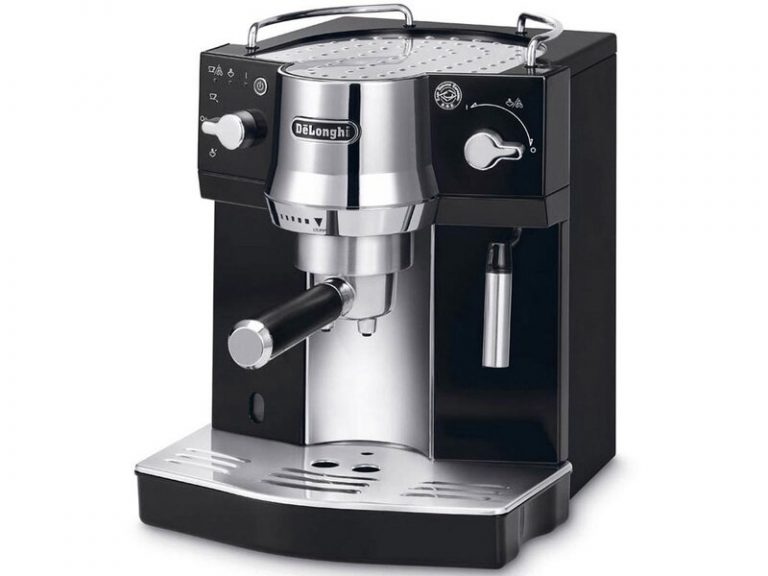
Operating principle of the coffee maker
Current coffee makers often have two basic principles: vacuum and osmosis. Cold water from the tank will be fed into the brewer using a rotor with a rotation speed of 30 revolutions per second. Around the rotor are 4 springs with 4 water valves that push water into the water pressure pipe into the boiler. Here, the water will be boiled up to 200 degrees Celsius and when it meets the standard, the steam will be sent to the coffee maker.
The brewing system will ensure the required amount of water. At this time, the boiling water will soak every drop into the coffee, helping the coffee to bloom evenly and produce each drop of the most delicious and flavorful coffee. Thanks to the professional skills of the mixologist. The right compression technique and amount of coffee will help your cup of coffee become the perfect one.
Above is basic information about the structure and operating principles of the coffee maker. Hope the above information helps you better understand this tool when using it every day. Don't forget to visit hoanghiepcoffee.com to learn more about coffee making tools and ingredients!
Explore more:
How to preserve flavorful coffee for the longest
How to classify pure coffee and dirty coffee
HOANG HIEP F&B
Address: 298 D. Le Trong Tan, La Khe, Ha Dong, Hanoi
Phone: 093 234 44 88